
Why Does My Dog Jump on Guests STILL?
A lot of dog owners feel confused when their dog jumps all over guests even though the dog knows how to sit perfectly during training.
You might even tell them to sit when someone walks in… and suddenly the cue seems to disappear, even if you’ve practiced it for weeks. It’s frustrating, but the truth is: your dog isn’t ignoring you on purpose. Cues create an easier pathway to behavior, but they do not become automatic until practiced many times over, among distractions, every day.
What’s happening usually comes down to excitement, context, and competing rewards.
Let’s break down what’s actually going on.
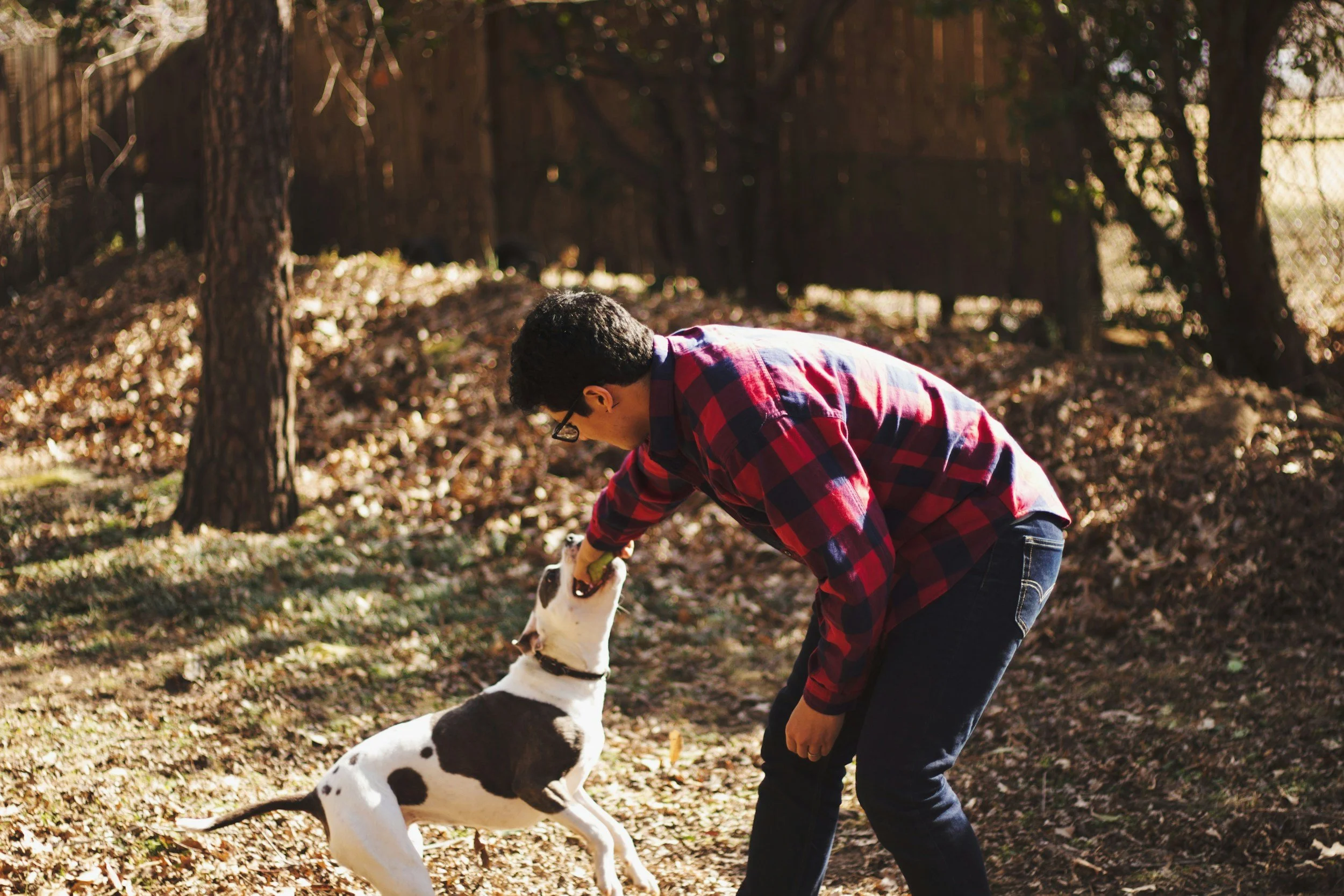
Guests Are One of the Most Exciting Events in a Dog’s Day
For many dogs, someone arriving at the door is the social equivalent of a surprise party. It’s unexpected, disrupts their usual day-to-day, and changes the surrounding environment. It creates excitement in the atmosphere, especially hearing everyone say, “who’s such a good doggy?”
That level of excitement can overwhelm the process of following a behavioral cue the dog normally performs in daily practice. Jumping up gives them access to a person’s face, which is how they try to introduce themselves!
Dogs, like humans, struggle to think clearly when their emotions spike. Even well-learned behaviors can temporarily disappear when the environment becomes highly stimulating and they’re curious.
“Sit” May Not Be as Strongly Reinforced as You Think
Many dogs know how to sit when:
treats are present
the house is quiet
they are practicing with their owner
they’re in familiar locations
But greeting guests is a completely different context.
Dogs don’t automatically generalize behaviors to new situations like excited baby voices and lots of people. A cue learned during training needs to be practiced in different environments before it becomes reliable without treats and facilitated calmness.
Training is one thing, but behavior is another; if your dog is only learning, they won’t automatically know when to apply their training. in their everyday behavior.
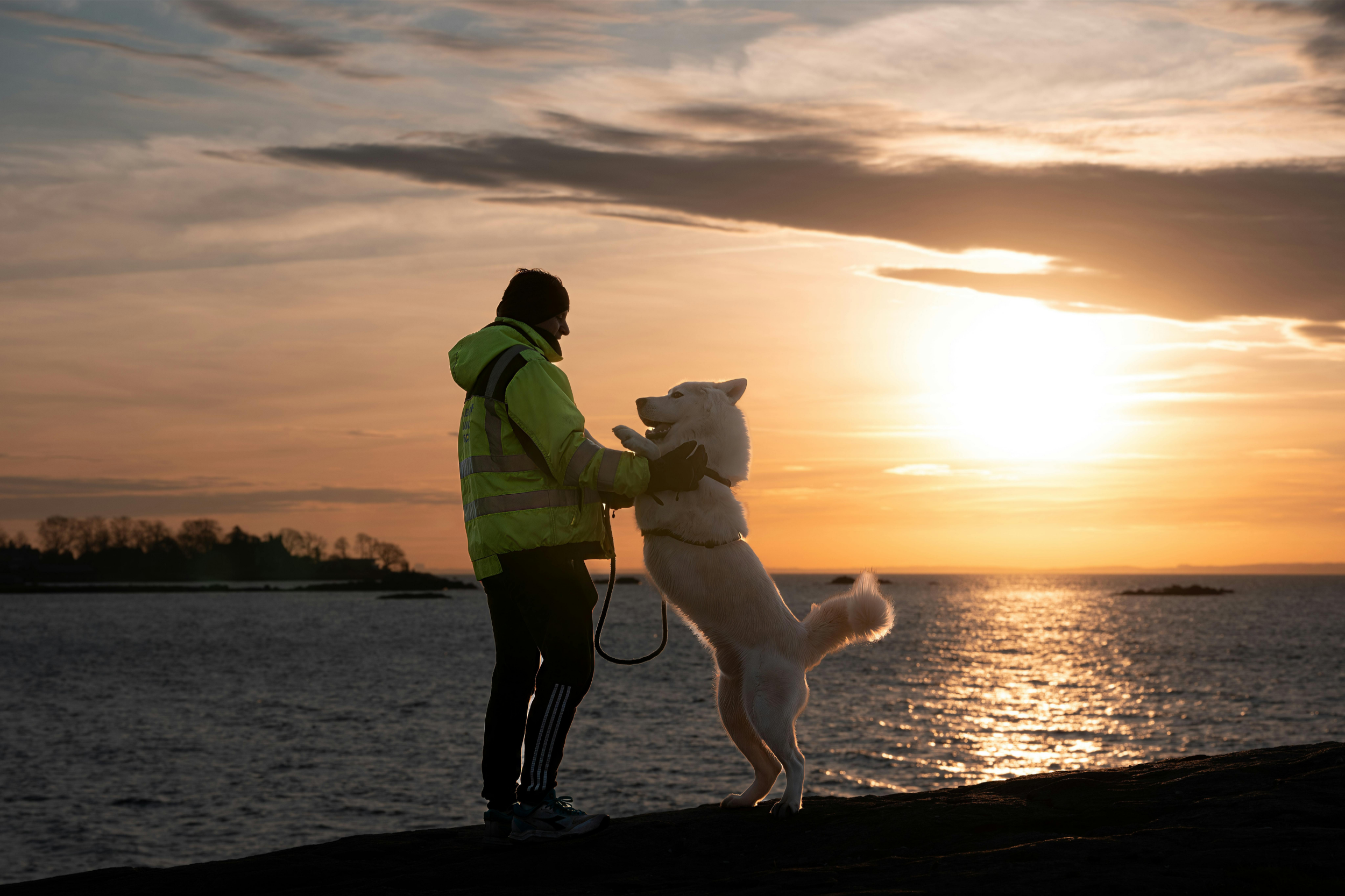
Jumping Works (From the Dog’s Perspective)
Another reason jumping continues is simple: it often gets rewarded without anyone realizing it.
When a dog jumps people talk to them, pull them down, tell them to stop, pet them, or anything else even without realizing. To a dog, all of that can feel like positive attention.
And attention is a powerful reward. So even if someone says, “get down! Down!” and pushes your dog down, the dog may still think:
Jumping makes humans interact with me, yippee!!
Guests Often Accidentally Reinforce Jumping
Even when owners are consistent, guests may unknowingly encourage the behavior like using the high-pitched baby voice, reaching over their head, petting them while they’re already jumping up, or bringing food around when they shouldn’t be.
As a dog owner, it is hard to tell people NOT to pet your dog when they really want to — but, in order for your dog to learn and stay consistent, these greetings need to be consistent for the time being too!
From the dog’s perspective, this confirms that jumping is a great way to greet people and get what they want out of it. Consistency between everyone interacting with the dog makes a huge difference.
“So… What Do I Do?”
The goal isn’t just stopping jumping; it’s teaching the dog what to do instead.
As you practice, allow your dog 5-10-minutes of decompression when guests come over, either on a leash, tethered, or in a crate — that’s your short-term management to break the behavior pattern.
In the long term: every day, practice calm walking and calm greetings at the door. Reinforce with attention and treats.
Then, practice sitting at the door and sitting while the door is open. Reinforce more.
All you need is 5–10-minute reps of practice, knowing your dog’s motivators, and daily consistency. If you really want to see your dog’s brain in action, engage your dog in impulse control exercises like Find It, Hide & Seek, or Recall Games to sharpen the way they problem solve in the moment.
Over time, dogs learn that calm behavior is what earns attention, walks, treats, and everything in between! If this seems a bit complex right now, there is no harm in scheduling a consultation to see a demonstration.
Remember: Excited Dogs Aren’t Being Disobedient
Jumping is usually a sign of enthusiasm and social excitement, not disrespect. Dogs greet face-to-face in their own social interactions, so jumping is a natural attempt to get closer to a person.
With practice, clear communication, and consistent expectations, most dogs can learn calmer greeting habits.
~ Ashley