
Case Study 001: Regulating Big Feelings with Slow Exposure
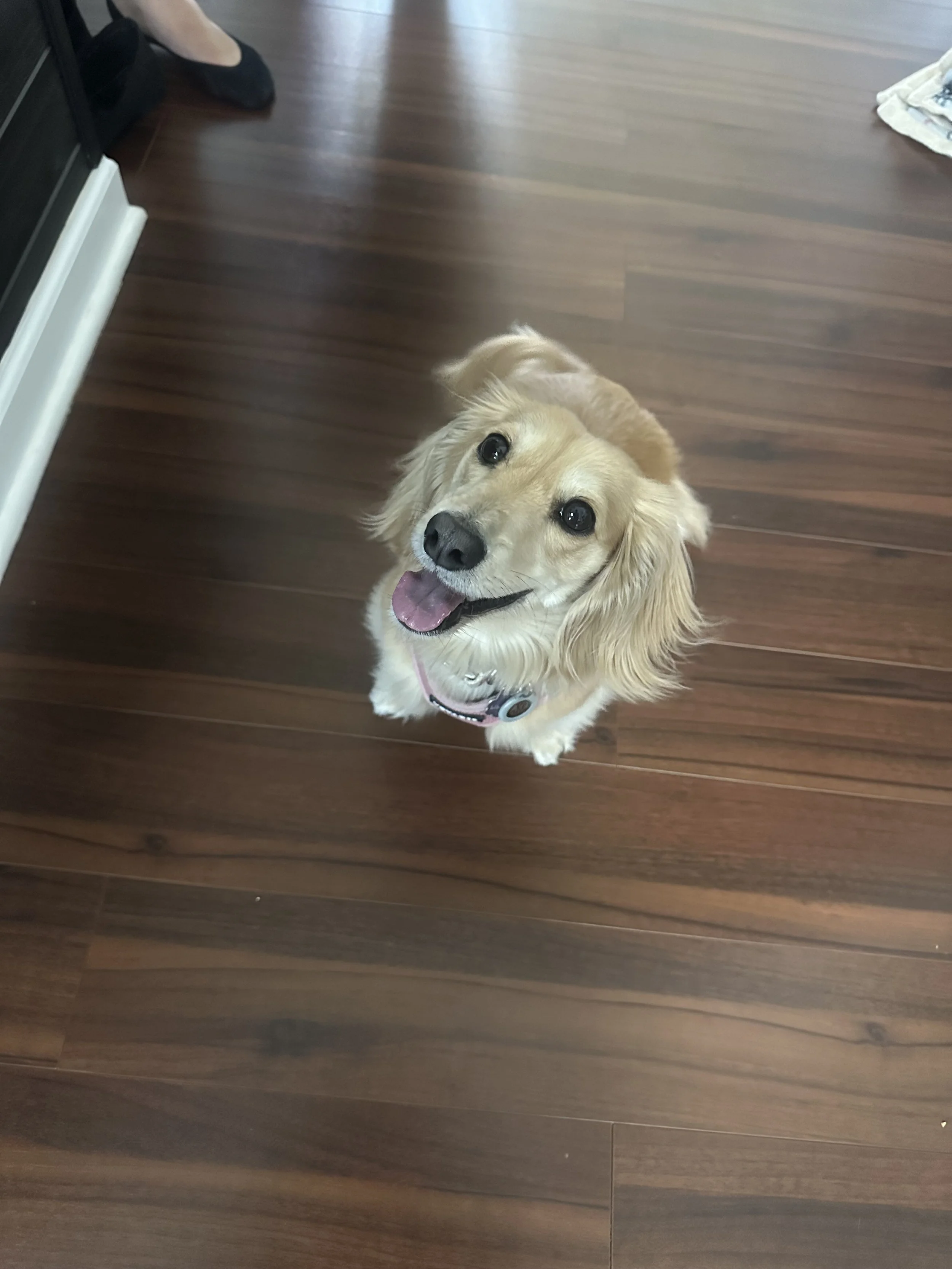
All names are generic placeholders to adhere to client confidentiality.
This dog will be referred to as “Bella” throughout this case study. Publishing of case information is for educational purposes only.
Case Focus
Basic Obedience, Late Socialization, Confidence Building, and Reactivity with “Bella,” a 2-year-old bright, affectionate, active, and loyal Dachshund.
Her lifestyle evaluation had not shown any concern for safety, exercise, enrichment, or overall well-being. Owners had done prior breed research and had attempted resolving the behaviors themselves before reaching out to Ashley at Pawfect Partner LLC in November of 2025.
Prior to starting training, they were encouraged to reach out to their breeder to see if other littermates had reported similar behavior just in case there was a genetic component or if the breeder did not start early socialization as expected with that particular litter.
Initial Behavior Concerns
Bella (placeholder) was reported by the owners to have difficulty settling down in the home and exhibited strong reactions to doorbells, visitors, people/dogs outside, and separation. Behaviors observed were barking, obsessive jumping, pacing, and a fixation that made her unable to cope and get back on track with her day for at least a few hours. Daily triggers kept her in a state of high arousal, which contributed further to separation distress and overexcited greetings.
She was reported to be tolerant of the crate when tired, but confinement further frustrated her when separated when owners both had work. When left out, she would engage in some obsessive barking and pacing for hours before settling down. Owners were encouraged to practice tethering for a few minutes a day while they were home instead to gradually introduce chilling by herself as a positive concept.
Outside of the home on walks and at parks, Bella showed mild fear reactivity toward people and dogs. Behaviors observed were pulling on leash, lunging, barking, pacing, and backing up/cowering when approached by people. Due to this behavior, her owners had been hesitant to take her outside for long outings, unsure of what to do to manage this behavior.
Owners were willing to muzzle train, if necessary, but Bella was determined to not be a significant bite risk after evaluation. They were encouraged to purchase a “Do Not Pet” leash sleeve or bandana to maintain enough space away from triggers when on walks.
She was reported to be very smart and affectionate without any distractions or triggers present, and enjoyed puzzle toys, playing fetch, playing hide & seek, and trick training practice with her owners.
Her baseline behaviors included demand barking, attention-seeking, but laser-focus once engaged and working for rewards.
Their initial goal was to have her work toward being a therapy dog; but they had altered their goal to be just achieving neutrality around dogs and strangers before considering further training.
Hypothesis & Progress
The hypothesis for this case was as follows: if we build and consistently reward engagement in multiple environments while making each training session fun and rewarding, self-disengagement, processing, & settling will follow with time — maintaining adequate distance from triggers to remain under threshold.
Bella’s training plan consisted of engagement & confidence building exercises, basic obedience skills like sitting, laying, and place with duration, and gradual integration into a group class setting.
Below are summaries of every other lesson and the improvements reported from the lesson before. Not all details are included to keep an element of privacy for the owners.
Lesson 2 — Foundational Skills
Owners reported a noticeable shift in demeanor after being consistently rewarded for engagement in the home after working on focusing, settling, and basic obedience skills during lessons. They reported significant changes with her interactions with other family members.
High-value rewards were determined to be freeze dried banana, freeze dried chicken, and peanut butter. Low-value rewards used throughout daily practice was her kibble.
Lesson 4 — Working Around Mild Distractions
Owners reported that outside family members saw a noticeable change in her behavior during Thanksgiving after spending time daily preventing attention-seeking behavior and rewarding quiet among mild distractions like light knocking and YouTube sounds. They reported significant improvement with leaving the house as they checked home cameras during the day — Bella was reported to have gone from obsessive barking at the gate in front of the door to waiting on the couch for a few minutes as her parents left.
Owners were encouraged to take car rides, sit outside for a few minutes, or just go out and focus on having fun and doing silly tricks to slowly expose her to new environments and strengthen their relationship. They continued to use high-value rewards when working around more distractions and around triggers.
— Family took a break during the remainder of the winter to work on known skills before progressing during the spring —
Lesson 6 — Practicing Disengaging
Owners reported lessened reactions on walks and on neutral ground with people; reported to be a warning bark, but less lunging, barking, and pacing overall. Bella was reported to be doing well with directional cues during daily walks. They were encouraged to keep up with the Engage-Disengage game around triggers, even if there was no noticeable emotional shift. Owners were able to take her to downtown areas with confidence as she ignored oncoming people.
During this stretch of time in between private lessons, Bella started sitting in on Puppy Class to work on engagement, disengagement, and redirection around additional stimuli in a controlled setting. They were instructed to use the long line to offer the least pressure possible to encourage good decision-making and engagement.
At the start of the class series, all vision of other dogs had to be blocked and Bella had to remain at least 50 feet away to remain under threshold. When she did become distressed, owners were encouraged to create distance and encourage her to sniff around for high value rewards to aid in decompression before rewarding engagement and check-ins.
Owners switched between using high and low-value rewards.
Lesson 8 — Engage-Disengage with Fake Dog
Owners reported minimal dog reactivity when on walks and on neutral ground. Bella was observed in group classes curiously engaging in observing the other, non-reactive dogs intermittently throughout the class time with lessened reactivity overall after working around a fake dog and being exposed to different environments in between lessons.
At the end of the class series shortly after ending private lessons, her new observable threshold was about 20 feet away with careful behavior interruption and timing of rewards.
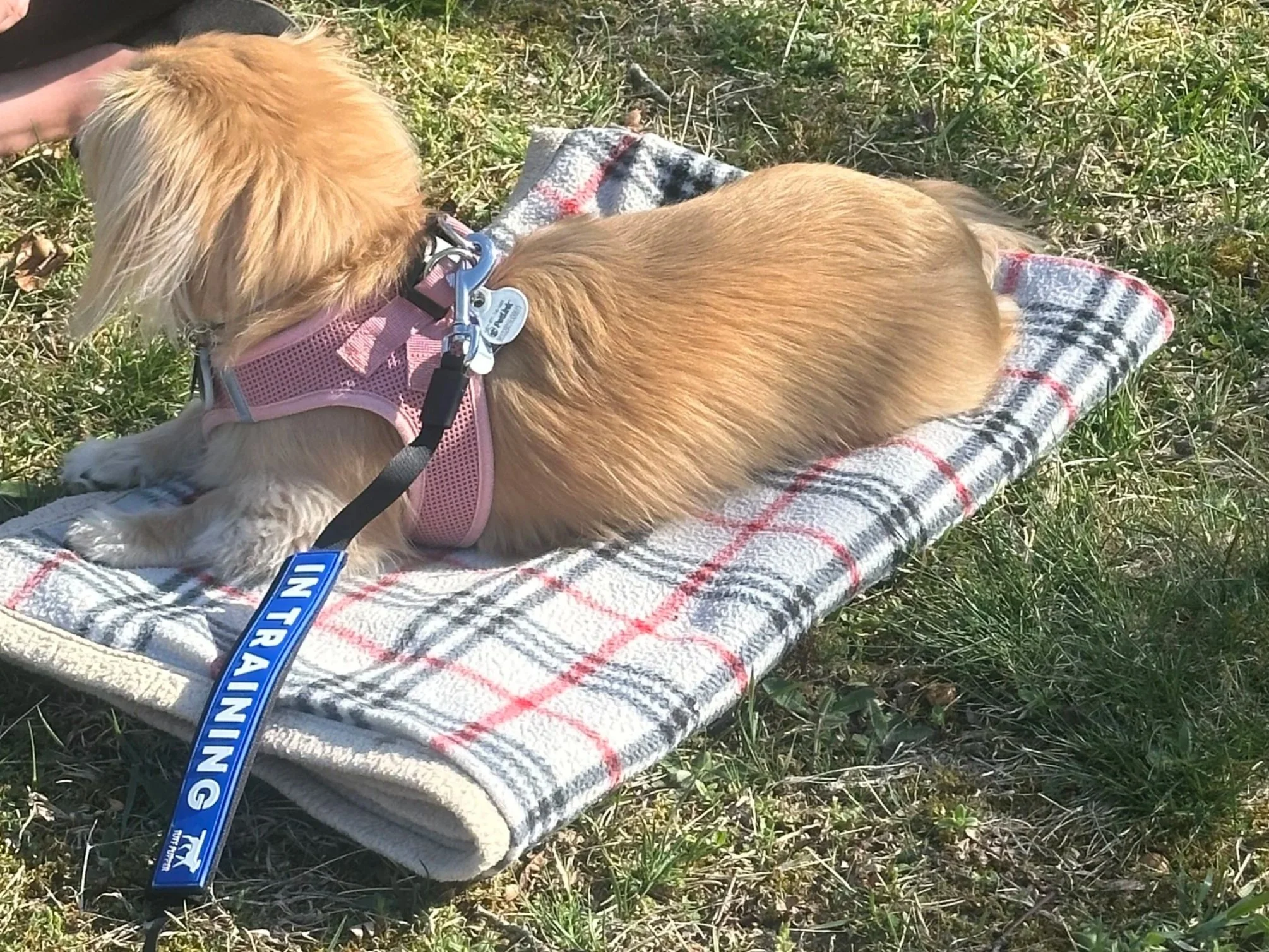
“Bella” practicing settling during her private lesson before sitting in on group class a few days later to become familiar with the environment.
End Goal & Results
The end goal for Bella was to maintain neutrality around dogs and people without having to engage or approach on a typical day. This goal was reached at the end of the group class series in May 2026.
Bella’s owners ended training feeling more confident and better equipped to handle any reactions as they do arise, but ultimately, learned how to identify what she needs to thrive and when she needs distance to process when adventuring out of the house.
Trainer Reflection
What worked?
Engagement
Sit, Down, & Settle
Wait at Gate & Doors
Loose Leash Walking & Automatic Check-ins
Doorbell: Prioritizing “Bouncing Back”
Tethering
Paws Up & Place
Long Line Around Triggers to Remove Pressure
Dummy Dog Engage-Disengage
Group Class Exposure
Supervised Separation
What could have been improved?
Better Emphasis on Crate Conditioning
Exposure Around Kids
Specific Markers for Alternate Rewards
Rate of Reinforcement as Skills Progressed
Closing
Bella has since continued training and learning from her owners who have implemented a lot of recommended skills and management taught by Ashley and Pawfect Partner LLC.