
Case Study 002: Management Influences Training Capability for Adult Poodle-Mix
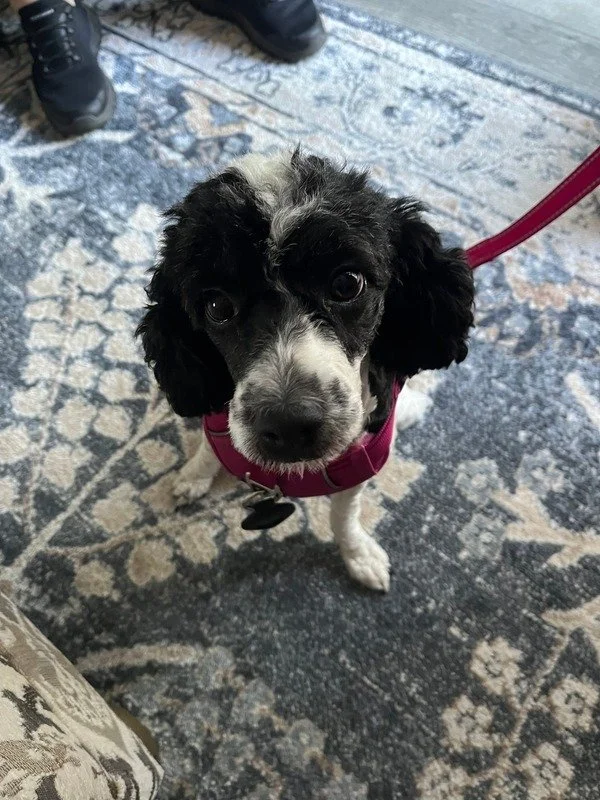
All names in this case study are placeholders to adhere to client confidentiality and privacy. These case studies are published for educational purposes only.
Case Focus
Basic Manners, Resource Guarding, Crate Training, Polite Greetings, & Enrichment with “Bella,” (placeholder), an approximately 3-year-old Poodle Mix.
Her lifestyle evaluation during the initial consultation showed mild structure imbalances in her day-to-day between an irregular rest schedule and inconsistent crating when necessary.
She was reported to have been adopted by the current household from a private rescue in Howell, NJ, a couple months prior to seeking training, and her owner was having a difficult time managing some of the behaviors she was seeing. She had attempted to resolve this behavior herself before reaching out to Pawfect Partner LLC in April of 2026.
The primary concern was to address Bella’s tendency to react to unexpected visitors in a defensive manner. After being evaluated, it was determined that a few different factors were actively contributing to this pattern.
Prior to starting their lesson package, they were encouraged to work on some crate conditioning exercises upon visitors entering the home.
Initial Behavior Concerns
“Bella” was reported to have difficulty settling down regularly, particularly when their daily routine changed, her owner left the house, and when visitors entered the home. This made it extremely difficult for her to feel secure in her environment. This insecurity affected her ability to eat, sleep, and play, which contributed to the overall dysregulation observed.
She was reported to detest being crated to the degree of noticeable stress, including involuntary elimination, vocalization, and experiencing dysregulation after being released. This response further limited her owner’s ability to safely manage things like visitors, separation, and rest with confidence. Owners were advised to take the top off of the plastic kennel and encourage her to just walk in and out as she pleases to remove the pressure and negative connotation previously built.
Bella was reported to have a high prey drive and would become engaged in chasing wildlife when outside on a short leash. This made it distressing for her owner to walk her on a leash safely. Owner was encouraged to try to find other outlets for that prey drive during play.
Her owner had additionally reported concerns with potential resource guarding behavior, particularly with guarding the owner’s space from others. If select people approach quickly, that was reported to cause a defensive reaction from Bella specifically near furniture or the front door if her owner was there as well. During the consultation, Bella regularly went back-and-forth between seeking attention from the trainer and her owner without exhibiting any guarding behavior at that moment. They were instructed to limit access, when at all possible, by removing the dog from the owner’s space when visitors are over and to consider muzzle training as preventative management even though no extreme behavior had been directly observed.
Bella’s owner was hesitant to muzzle train and specifically requested other management methods be tried first. The other alternative management method at this time was to remove the dog from being around visitors as a whole to prevent this behavior from happening again and being reinforced by accident by others that don’t know how to respond to it. They were encouraged to brief guests on how to ignore Bella after allowing her time and space to decompress and were encouraged to keep her on a leash when visitors entered the home if not crated entirely. They agreed to this management plan as training began.
Further, outside of the home on walks and at parks, Bella showed mild fear reactivity toward people and dogs after having had a bad experience with a neighbor’s dog getting loose and rushing them. Behaviors observed were pulling on leash, lunging, barking, pacing, and general alertness. Due to this behavior, her owners had been hesitant to take her outside for long outings, unsure of what to do to manage; they did not have access to a yard, so Bella had limited time and freedom to explore outside.
Bella was determined to not be a significant bite risk if all management methods were adhered to and followed for the duration of and after training.
She was reported to be very smart and affectionate without any distractions or triggers present, and enjoyed belly rubs, cuddles, relaxing with her owner, chewing on hard chew toys, and puzzle toys.
Her baseline behaviors included demand barking, attention-seeking, and high distractibility.
Their overall end goal was to eliminate the problematic reactions to visitors and learn how to manage leash pulling, reactivity, and resource guarding.
Hypothesis & Progress
The hypothesis for this case was as follows: if we prevent the self-rewarding behaviors from happening by removing the opportunity to engage and managing the environment, we can create space for learning better coping strategies.
It was determined by Pawfect Partner LLC’s trainer Ashley Geddes that this case was a combination of a lack of structure during the day, limited enrichment and exercise, time to decompress after being adopted, and overall insecurity in the environment. Temperamentally, Bella was a very sweet, shy dog.
Bella’s training plan consisted of engagement & confidence building exercises, crate conditioning, basic obedience skills like sitting, laying, and place, boundaries with furniture, and enrichment methods.
Bella’s owner had a limited budget and committed to four initial lessons, with the fourth lesson being a reassessment of behavior as well. After the fourth lesson concluded, they were encouraged to continue training for the best results, but they reported to be happy with where they were and chose not to renew.
Below are summaries of every other lesson and the improvements reported from the lesson before. Not all details are included to keep an element of privacy for the owners.
Lesson 2 — Foundational Skills & Crate Conditioning
Owner reported a noticeable shift in behavior around the crate after being encouraged to practice tossing high value treats inside the crate, feeding her meals in the crate, and practicing closing/opening the door. Owner was able to cue her into the crate, shut the door, and take steps away by the second lesson. Owner was encouraged to practice putting her in the crate prior to opening the door for visitors for the remainder of the week.
High-value rewards were determined to be freeze-dried duck, freeze-dried chicken, and freeze-dried beef liver. Low-value rewards used throughout daily practice was her kibble.
Lesson 4 — An Enrichment Walk
Owner reported that since last time, crating her had become easier when visitors were around. They had roofers come and were able to keep Bella calmer in the crate as they walked in and out. Bella was reported to have an easier time settling down with friends and family coming over after being allowed time to observe, think, and decompress first. They reported that a re-greeting with the family member previously inciting a negative reaction had gone well after the past two weeks of limiting all access to this person.
It was also reported that Bella had begun to prefer handfeeding and working for her meals over free-feeding during the day. Given that Bella had previously refused to eat when not around her owner, this is a better alternative for their relationship and trust building.
Owner was encouraged to use a long line when out on walks and try to engage Bella in some form of play; whether it’s fetch, tug, chase, running, etc. to allow her freedom to move around, sniff, explore, etc. while out on longer walks. They were shown how to use a long line and how to encourage disengagement from high-value distractions.
End Goal & Results
The end goal for Bella was to eliminate the extreme reaction to visitors and build her confidence in her daily life. Her owner felt this goal was achieved in the beginning of May 2026. Pawfect Partner LLC and it’s trainer Ashley Geddes, ABC-DT, had once more encouraged them to continue training, but they felt confident enough to step back from professional support.
Bella’s owners ended training feeling more confident and better equipped to handle any reactions as they do arise, but ultimately, learned how to identify what she needs to feel secure as she continues to settle in.
Trainer Reflection
What worked?
Engagement
Sit, Down, & Settle
Wait at Doors
Crate Training
Managing Greetings
Furniture Boundaries
Long Line Enrichment Walk
Supervised Separation
What could have been improved/emphasized more?
Better Emphasis on Routine Exercise Affecting Behavior
Exposure Around Kids, Other Adults, and Outdoor Settings
Specific Markers for Alternate Rewards
Rate of Reinforcement as Skills Progressed
Practice in Real-Life Scenarios During Lessons
Closing
Bella has continued living with her owner that has implemented daily management and training learned from Ashley Geddes, ABC-DT, and Pawfect Partner LLC. No further updates have been reported.