
All names in this case study are placeholders to adhere to client confidentiality and privacy when discussing details of their training case. These case studies are published for educational purposes only.
Case Focus
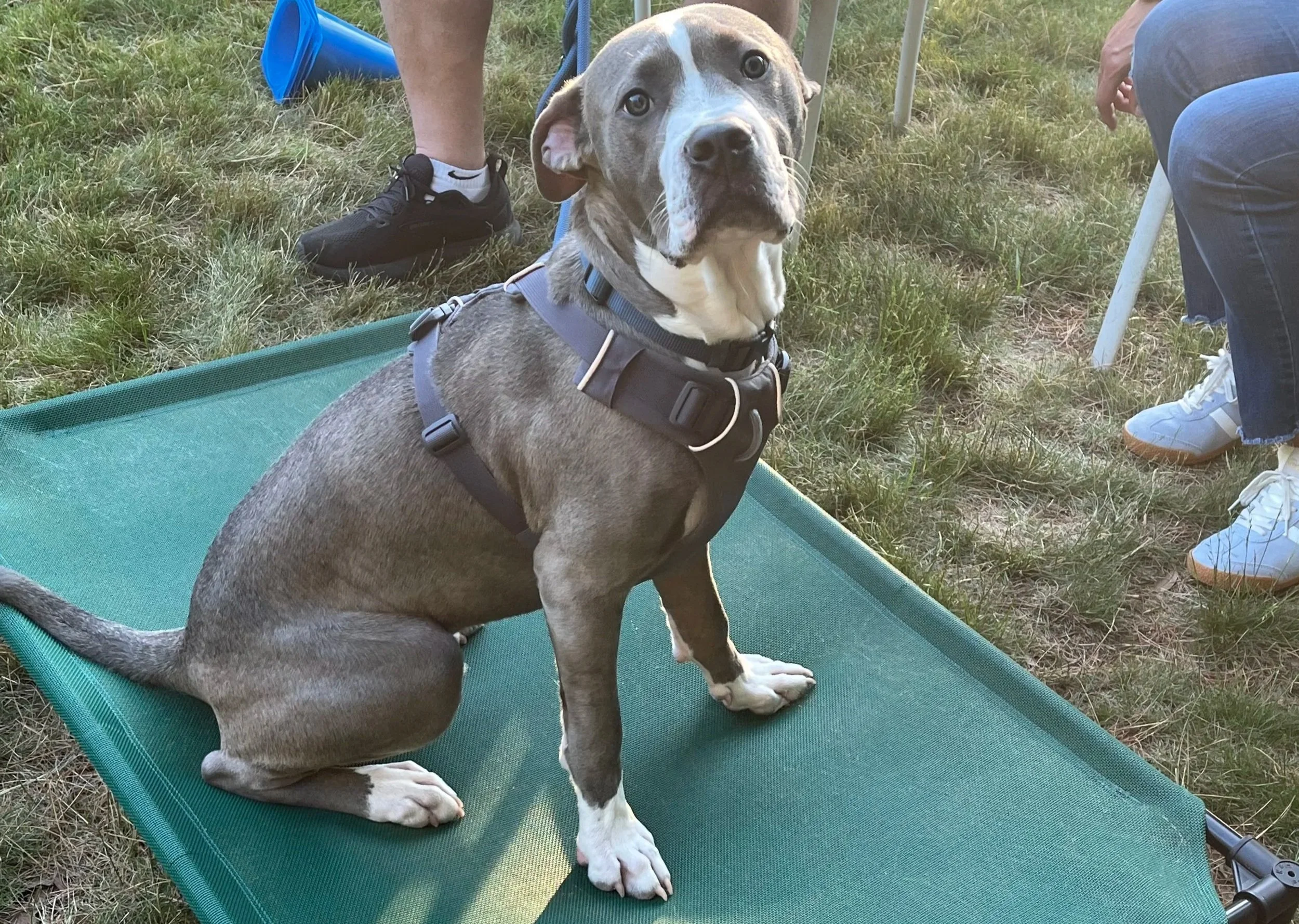
Puppy Training, Basic Manners, Impulse Control, Environmental Management, and Puppy Class with “Fido,” a 5-month-old Pitbull Mix.
His lifestyle evaluation did not show any concern for safety, well-being, enrichment, behavior abnormality, or health in anyway; part of the consultation went over what to expect with a puppy, how much sleep they need, how to approach separation and crate conditioning, and how to brief guests on how to act around him to prevent nipping, jumping, and other problem behaviors.
He was reported to have been adopted a few weeks prior to seeking training support. His family had initially reached out to enroll into Puppy Kindergarten with Pawfect Partner LLC and inquired about private lessons as well.
The primary concern was to address Fido’s puppy behaviors, including nipping, pulling on the leash, ignoring cues, and jumping on visitors.
Prior to starting their class, they were encouraged to focus on capturing and rewarding his overall engagement & enrolling in Puppy Life Skills lessons.
Initial Behavior Concerns
“Fido” was reported to have difficulty with settling down in the crate, excitement when on leash, potty training, counter surfing, and exhibited poor social manners with visitors upon the initial evaluation during his consultation; but overall, nothing of concern was reported, and all behaviors observed were consistent with 5-month-old puppies.
He was reported to otherwise be a happy puppy despite poor manners and excitement; no significant reported prey drive or resource guarding at this time.
Fido was not determined to be a bite risk, and showed no signs of aggression toward people, dogs, or other animals.
Further, outside of the home, Fido was reported to highly distractable and excited even in the yard.
His baseline behaviors reflected an energetic, socially demanding puppy.
Their overall end goal was to prepare Fido and his family for puppy class, and to start building healthy routines in the home.
Hypothesis & Progress
The hypothesis was as follows: if we (owners & trainer) work together to reward the behaviors we’d like to see more of within a low-distraction environment at home, manage the environment to prevent overexcitement, and instruct visitors to follow directions during greetings, that’ll help set the foundation to help him succeed in Puppy Kindergarten.
It was determined that this case presented as a typical bouncy puppy that may have had a lack of early socialization and training prior to being adopted.
Fido’s training started as Puppy Life Skills, where he learned basic skills like sitting to be pet, waiting to exit gates/doors, learning how to settle and do nothing, and other cues like down, off, and crate.
Fido’s family continued training into Puppy Kindergarten, where Fido learned other skills like leash walking, engagement, place, and waiting his turn in the presence of other puppies.
The end goal for Fido was to set both him and his family up for success in raising a confident, adaptable puppy.
Trainer Reflection
What worked?
Engagement
Sit, Down, & Settle
Wait at Doors
Crate Training
Learning Around Distractions
Breed Knowledge
What could have been improved/emphasized more?
Preventing Resource Guarding
Exposure Around Kids, Other Adults, and Outdoor Settings
Specific Markers for Alternate Rewards
Rate of Reinforcement as Skills Progressed
Practice in Real-Life Scenarios During Lessons
Closing
Fido has continued living with her owner that has implemented daily management and training learned from Ashley Geddes, ABC-DT, CPDT-KA, and Pawfect Partner LLC. No further updates have been reported.